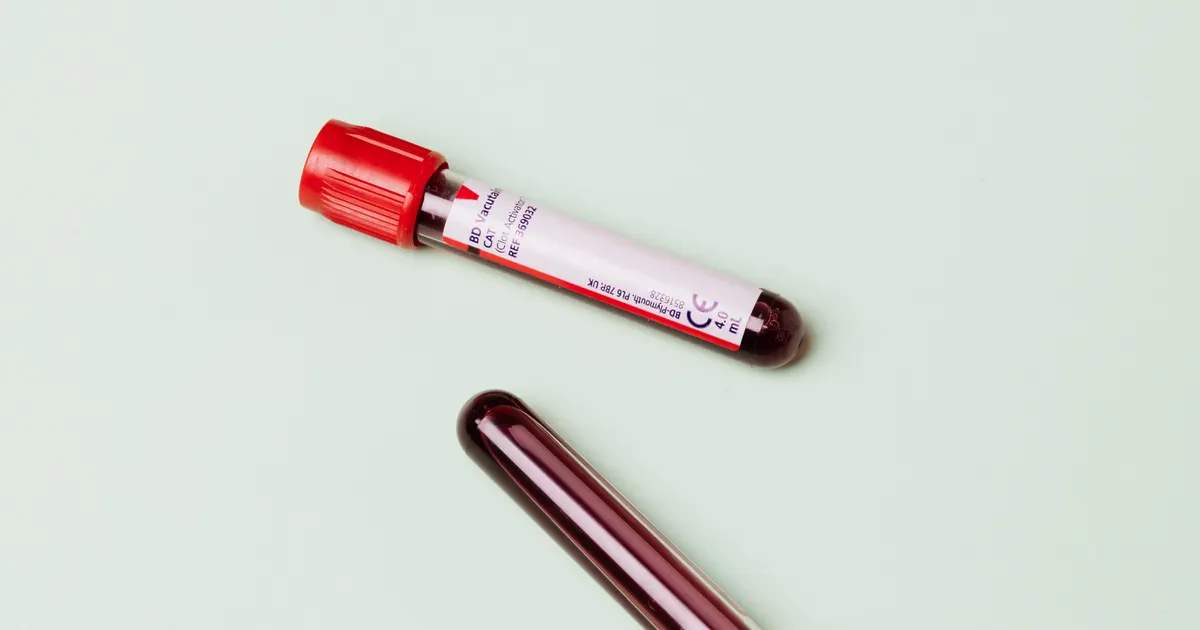
There is no single best hormone test for women; serum, saliva and dried urine measure different things, and the right choice depends on the question being asked and where you are in your cycle. Serum is the reference standard for diagnosis and for anything a specialist will act on. Dried urine describes how hormones are metabolized and how cortisol moves across a day, which serum cannot show from one draw. Saliva measures the free fraction and is reliable for some analytes and poor for others. Most disappointing hormone panels fail for one of three reasons: the sample was taken on the wrong cycle day, the test answered a question nobody was asking, or the result was compared against an "optimal" range with no evidentiary basis. This article sets out what each method measures, the timing science, what metabolites add, what regulatory certification does and does not guarantee, and how a result should actually change a plan.
In this article
- Serum, saliva and dried urine measure different fractions of the same hormones
- Cycle timing determines whether a result is interpretable at all
- Metabolite testing answers questions a single blood draw cannot
- CLIA certification is a laboratory quality standard, not proof that a test is clinically useful
- Reference ranges and "optimal" ranges are built differently, and the difference matters
- What each panel typically costs, and what a result should change
What each method actually measures
Serum measures total hormone concentration at one moment. Most circulating estradiol and testosterone is bound to sex hormone binding globulin and albumin, so a total value reflects both production and binding capacity. That is why free testosterone and SHBG add information that total testosterone alone does not. Serum is the basis of essentially all diagnostic guidance, including the Endocrine Society clinical practice guidelines, and is what any endocrinologist or gynecologist will want to see.
Saliva measures the unbound, biologically available fraction. For cortisol this is genuinely useful: salivary cortisol is a validated measure and is used in mainstream endocrinology, including late-night salivary cortisol for suspected Cushing syndrome. For estradiol, progesterone and testosterone, salivary assays are far less reliable, with wide variability and poor correlation to serum, which is why they are not used diagnostically.
Dried urine measures hormones and their metabolites excreted over a collection period. Four or five timed samples across a day capture the pattern rather than a snapshot, which suits cortisol particularly well. Because urine carries downstream metabolites, it can describe metabolic routing that serum cannot see.
Dried blood spot is a capillary-blood alternative to a venous draw, convenient for at-home collection. Analyte-specific validation varies considerably, so it is only as good as the specific assay used.
Side by side: serum, saliva and dried urine
| Serum (venous blood) | Saliva | Dried urine (e.g. DUTCH) | |
|---|---|---|---|
| What it measures | Total hormone, plus free fractions where specifically assayed | Unbound free fraction | Parent hormones plus their metabolites, excreted over the collection window |
| Best used for | Diagnosis, FSH and estradiol staging, thyroid, ferritin, testosterone with SHBG | Cortisol rhythm, including late-night cortisol | Estrogen metabolism, androgen pathway routing, free cortisol and cortisone across a day |
| Timing demands | Cycle day matters for estradiol, FSH and progesterone | Time of day is critical; cycle day matters for sex hormones | Collection days set by cycle phase; multiple timed samples in one day |
| Main strength | The reference standard; comparable across laboratories; covered by insurance | Non-invasive, repeatable, good for daily rhythm | Shows pattern and metabolism rather than a single point |
| Main limitation | One point in time; misses metabolism and daily rhythm | Sex-hormone assays are unreliable; contamination from topical products is common | Not a diagnostic standard; affected by kidney function; interpretation varies between clinicians |
| Insurance | Usually billable | Rarely covered | Usually self-pay |
Cycle-day timing, and why it decides everything
Hormone values only mean something relative to where you are in the cycle. Estradiol varies several-fold between the early follicular phase and the pre-ovulatory peak, and progesterone rises roughly tenfold after ovulation. A value with no cycle day attached is uninterpretable.
- Cycle days 2 to 4 for FSH and estradiol. This early-follicular window is where population reference data exist. A single FSH does not stage perimenopause, because it oscillates markedly between cycles.
- Roughly 7 days after ovulation for progesterone, which is the mid-luteal peak. The common instruction to test on day 21 assumes a 28-day cycle with day-14 ovulation. In perimenopause, when cycles shorten and ovulation shifts, day 21 frequently lands after progesterone has already fallen and produces a falsely low result. Confirm ovulation with LH testing or basal temperature and count forward.
- Any day for thyroid function, ferritin, AMH, DHEA-S, HbA1c and vitamin D.
- Morning, 7 to 9 a.m. for serum cortisol and testosterone, both of which follow a diurnal rhythm.
- Any day if you no longer cycle, or if cycles are so irregular that phase cannot be established. In that case repeat testing over time is more informative than one panel.
Combined hormonal contraception suppresses endogenous FSH, estradiol and progesterone, so sex-hormone testing during use cannot stage the transition. Thyroid, ferritin and metabolic markers remain interpretable. Any decision to pause contraception for diagnostic clarity belongs with the prescribing clinician, and contraception remains necessary until menopause is confirmed. The staging framework behind all of this is described in the early signs of perimenopause.
What metabolites show that blood cannot
This is the substantive case for urinary testing, and it is worth stating precisely rather than promotionally.
Estrogen metabolism. Estradiol is metabolized down 2-hydroxy, 4-hydroxy and 16-hydroxy pathways, and those metabolites are then methylated by catechol-O-methyltransferase. Urinary panels report the proportions. Epidemiological work has examined ratios between these pathways and breast-cancer risk with mixed and largely inconclusive results, so these are best read as a description of routing rather than a risk score. A serum estradiol tells you the level; it tells you nothing about the route.
Androgen routing. Testosterone is metabolized through 5-alpha and 5-beta pathways. Higher 5-alpha activity is mechanistically relevant to acne, hair thinning and hirsutism, and it can be elevated while total testosterone sits mid-range. This is the most clinically intuitive thing metabolite testing adds.
Cortisol versus cortisone, across a day. Serum cortisol from one morning draw cannot show a flattened curve or an elevated evening value. Multiple timed urine or saliva samples can, and free cortisol with its inactive cortisone partner distinguishes clearance from production. This describes a rhythm. It describes cortisol rhythm, the measurable side of what is often called "adrenal fatigue", and it does not replace morning serum cortisol or ACTH stimulation testing where genuine adrenal insufficiency is suspected.
Melatonin and selected organic acids are reported on some panels as markers of sleep signaling and B-vitamin and neurotransmitter metabolism. These are supportive context, and the evidence linking them to specific interventions is limited.
Validation and limitations: what CLIA does and does not mean
Almost every functional test is marketed as "CLIA-certified", and it is worth knowing what that certifies. The Clinical Laboratory Improvement Amendments are administered by the Centers for Medicare and Medicaid Services and set standards for laboratory personnel, quality control, proficiency testing and record keeping. CLIA certifies that a laboratory runs its processes to a defined standard. It says nothing about whether the test predicts anything clinically useful.
Most specialty hormone panels are laboratory-developed tests, meaning they are designed, validated and performed within a single laboratory. The FDA has historically exercised enforcement discretion over this category, so LDTs generally have not gone through the premarket review applied to commercial diagnostic kits. Precision Analytical, which runs the DUTCH panels, has published method-validation work covering accuracy, precision and comparison against liquid chromatography tandem mass spectrometry, and its assays use LC-MS/MS rather than immunoassay, which is a genuine analytical advantage. Method validation and clinical validation are separate questions, though: demonstrating that an assay measures a metabolite accurately is not the same as demonstrating that acting on that metabolite improves outcomes.
Three further limitations are worth holding in mind. Urinary metabolite output depends on kidney function and hydration. Reference populations for these panels are smaller than for routine serum assays. And interpretation between practitioners is variable, which is a real source of over-treatment. These panels are useful hypothesis-generating context in the hands of a clinician who knows their limits, and that anything consequential should be confirmed on serum. That is the standard we apply within the functional medicine process at Interlinked Wellness.
Optimal ranges versus reference ranges
A laboratory reference range is normally the central 95 percent of results from a reference population, meaning one in twenty healthy people falls outside it by definition. Ranges also differ between laboratories because assays differ, so the same sample can produce different flags at different labs.
"Optimal" ranges, common in functional medicine reporting, are narrower bands intended to reflect where function is best rather than where disease begins. Sometimes there is a defensible basis, as with vitamin D thresholds or the observation that a thyroid-stimulating hormone in the upper reference range with positive antibodies and clear symptoms warrants attention. Often there is not: several widely circulated optimal ranges derive from expert opinion rather than from outcome data. The risk runs in both directions. A rigid reference range can dismiss a woman with real symptoms; a narrow optimal range can turn a healthy value into a treatment target. The reasonable middle is to treat symptoms and trends in context, use ranges as orientation, and require a stronger evidentiary basis the more consequential the intervention.
What it costs
Prices vary by laboratory, region and insurance status, so these are general market bands rather than quotes. A standard serum hormone panel run through insurance is often the least expensive route and is frequently covered when there is a documented clinical indication. Self-pay serum panels through direct-to-consumer laboratories commonly fall in the low hundreds of dollars. Comprehensive dried-urine panels such as DUTCH Complete are typically several hundred dollars and are usually self-pay, though they are often eligible for HSA or FSA reimbursement. Saliva cortisol panels sit at the lower end. Ask three questions before ordering anything: what decision will this result inform, is the same information available on a serum test my insurance covers, and who is interpreting it. Testing that cannot change a plan is expenditure rather than information.
How results should change the plan
| Finding | What it suggests | What typically changes |
|---|---|---|
| Low mid-luteal progesterone with regular cycles | Anovulatory or short luteal phase cycles, common in the early transition | Cycle tracking over several months; sleep and stress load reviewed; prescribing discussion where symptoms warrant |
| Elevated FSH with low estradiol on day 3, plus symptoms | Consistent with the later transition | Staging conversation, bone and cardiovascular risk review, hormone therapy discussion with a prescriber |
| High 5-alpha androgen routing with mid-range testosterone | Follicle-level androgen exposure higher than serum suggests | Insulin resistance assessed; relevant to hair, skin and acne management |
| Flattened cortisol curve with normal morning serum cortisol | A rhythm disruption, not adrenal disease | Sleep timing, light exposure, training load and blood-sugar stability addressed first |
| Low ferritin with normal hemoglobin | Depleted iron stores before anemia | Cause of the loss investigated; repletion and retesting with a clinician |
| Positive TPO antibodies with upper-range TSH | Autoimmune thyroid disease in progress | Monitoring interval set; symptoms reviewed against thyroid guidance rather than dismissed |
Testing that does not change a decision does not need to be done. If you want the workup structured around a question rather than a panel, our perimenopause and menopause care and the wider guide to perimenopause set out how the pieces fit, and a consultation is where the specific plan gets built.
FAQ
Is the DUTCH test better than blood testing?
Neither is better; they answer different questions. Serum is the diagnostic standard, is comparable across laboratories, and is what specialists act on. Dried urine adds metabolite routing and a picture of cortisol across a day, which one blood draw cannot provide. In practice serum answers "what are the levels", and dried urine answers "how is the body handling them". Anything consequential found on a urine panel should be confirmed on serum before it drives a treatment decision.
What day of my cycle should I test hormones?
Test FSH and estradiol on cycle days 2 to 4, and progesterone about seven days after ovulation rather than automatically on day 21. Day 21 assumes a 28-day cycle with ovulation on day 14, which is often wrong in perimenopause and produces falsely low progesterone. Thyroid function, ferritin, AMH, DHEA-S and vitamin D can be drawn any day. Serum cortisol and testosterone should be drawn between 7 and 9 a.m.
Are at-home hormone tests accurate?
Accuracy depends on the analyte and the assay, not on whether the sample was collected at home. Salivary cortisol collected at home is well validated. Salivary estradiol and progesterone are not reliable. Dried urine and dried blood spot performance varies by laboratory and by the specific assay method, with mass-spectrometry-based methods generally outperforming immunoassays. Collection technique matters too: topical hormone products, recent food and drink, and mistimed samples all corrupt results.
Will my insurance cover hormone testing?
Standard serum panels ordered for a documented clinical indication are usually billable to insurance. Specialty dried-urine and saliva panels are generally self-pay, though many are eligible for HSA or FSA funds. Because coverage varies by plan and by diagnosis code, it is worth asking which tests can be run through your existing coverage before adding a self-pay panel, and confirming with your insurer rather than the laboratory.
About the author

Anna Evans MSN, APRN, FNP-C
Founder, Interlinked Wellness
Anna Evans, MSN, APRN, FNP-C is a board-certified Family Nurse Practitioner licensed in Texas. She founded Interlinked Wellness, a virtual functional medicine practice serving women across Texas from offices in Dallas and Austin. Her clinical focus is perimenopause, hormone imbalance, gut health, thyroid and autoimmune conditions, and chronic fatigue.
More about Anna · Schedule a consultation · LinkedIn · Instagram
Medical disclaimer. The information on this page is provided for general education and is not individualized medical advice. At Interlinked Wellness, Anna Evans, MSN, APRN, FNP-C, provides personalized care based on your health history, symptoms, concerns, and goals. An individual consultation allows Anna to evaluate your specific situation and recommend an appropriate approach to care. Reading this page alone does not establish a patient-provider relationship. If you are experiencing a medical emergency, call 911 or your local emergency services.
Join Anna on a virtual wellness journey and unlock your full potential.