A perimenopause diet is built around protein, fiber and steady blood sugar rather than restriction. The reason is physiological: as estradiol becomes erratic and luteal progesterone falls through the transition described by the STRAW+10 staging system (Harlow et al., 2012), insulin sensitivity tends to decline, lean muscle is lost more readily, and fat storage shifts toward the abdomen. Eating patterns that would have been survivable at 32 stop being survivable at 46. This article sets out the targets that matter, what the evidence actually shows for phytoestrogens, a sample day built from those rules, and what is worth limiting including the two drinks that most reliably make symptoms worse.
Free interactive tool
Perimenopause plate check
Tick the habits that describe your usual day to see the change this article recommends for each one.
In this article
- What changes hormonally in perimenopause that food can genuinely influence
- Why blood-sugar stability comes before any other dietary decision
- Practical protein and fiber targets, and how to hit them at each meal
- What the evidence supports for soy, flaxseed and other phytoestrogens
- A sample day of eating with the reasoning behind each meal
- Alcohol and caffeine: the mechanisms, and where the thresholds sit
- What to limit, and the popular approaches not worth your money
What food can and cannot change
Three hormonal shifts define the transition. Estradiol fluctuates rather than simply falling, often spiking higher than in the reproductive years before dropping. Progesterone declines earlier and more steadily as ovulatory cycles become intermittent. FSH rises but oscillates, which is why one normal reading proves nothing in a woman who is still cycling. Those dynamics sit behind hot flashes, sleep disruption, cycle change and mood symptoms, and no meal plan controls them directly.
What food does influence is the metabolic layer sitting underneath. Declining estradiol is associated with reduced insulin sensitivity, unfavorable lipid shifts, accelerated loss of lean mass and bone, and redistribution of fat to the visceral compartment. Those changes amplify fatigue, drive the weight pattern described in our article on perimenopause weight gain, and raise long-term cardiometabolic risk at exactly the point when many women are told nothing is wrong. Diet is a strong lever on that layer and a weak one on vasomotor symptoms, and being clear about the split prevents disappointment.
Blood sugar first
If only one change is possible, make it this one. Post-meal glucose swings drive the reactive hunger, afternoon energy collapse and 3 a.m. waking that many women attribute entirely to hormones. Perimenopause makes those swings larger for the same meal, and they in turn worsen the sleep loss that further degrades glucose handling the next day.
- Anchor every meal with protein. Carbohydrate eaten alone produces a steeper rise than the same carbohydrate eaten with protein and fat.
- Eat breakfast, and make it savory. A pastry-and-coffee start sets up the entire day of swings; 25 to 30 grams of protein at breakfast does the opposite.
- Walk for ten minutes after your largest meal. Light muscular activity after eating blunts the post-meal glucose peak with no other change required.
- Keep liquid sugar out. Sweetened coffee drinks, juice and soda deliver glucose with no fiber, protein or fat to slow absorption.
- Be cautious with long fasts. Extended fasting is often marketed for midlife, but in women who are already under-eating protein, poorly slept or highly stressed it tends to worsen sleep and lean-mass loss. If it is used, it should not displace protein targets.
Fasting glucose, fasting insulin and HbA1c are the markers that show whether this is working, and they are cheap and widely available. Insulin resistance is measurable years before blood sugar looks abnormal, which is why we run those markers early rather than waiting for a fasting glucose to cross a diagnostic threshold (Endocrine Society clinical practice guidelines).
Protein and fiber targets that are worth hitting
Two numbers do most of the work. Protein protects the muscle and bone that decline fastest in this decade, and fiber feeds the gut bacteria involved in estrogen clearance while steadying glucose and cholesterol. Most women arriving in clinic are meeting neither.
| Target | Practical figure | Why it matters in perimenopause | Where it comes from |
|---|---|---|---|
| Protein | Roughly 1.2 to 1.6 g per kg body weight daily, spread across meals | Protects lean mass and bone, improves satiety, supports the training response | Eggs, fish, poultry, meat, Greek yogurt, tofu, tempeh, legumes, cottage cheese |
| Protein per meal | About 25 to 40 g at each of three meals | Muscle protein synthesis responds to the amount at a single sitting, not just the daily total | Three eggs plus yogurt; a palm-sized fish fillet; 200 g tofu |
| Fiber | About 25 to 30 g daily, from food | Supports the gut bacteria involved in estrogen clearance, steadies glucose, lowers LDL | Beans, lentils, oats, berries, leafy greens, nuts, seeds, whole grains |
| Calcium | Food first, toward the recommended intake for your age (NIH ODS) | Bone loss accelerates in late perimenopause and early postmenopause | Dairy, fortified plant milks, tinned sardines, calcium-set tofu, greens |
| Plant variety | Aim for 25 to 30 different plants weekly | Microbial diversity is associated with better gut and metabolic outcomes | Rotate herbs, spices, seeds, pulses and colors rather than eating the same five vegetables |
These are practical targets rather than prescriptions, and they need individual adjustment in kidney disease or with certain medications. Protein at the upper end of that range is generally safe in healthy kidneys, but the figure should be set with your clinician if you have any renal condition.
Phytoestrogens: what the evidence supports
Phytoestrogens are plant compounds structurally similar to estradiol that bind weakly to estrogen receptors. The two groups that matter in food are soy isoflavones and flaxseed lignans.
Soy has the better evidence. Meta-analyses report a modest reduction in hot flash frequency compared with placebo, developing over six to twelve weeks rather than immediately (NCCIH). Response appears to depend partly on whether your gut bacteria convert the isoflavone daidzein into equol, the more active metabolite, which only some women do. Whole soy foods such as tofu, tempeh, edamame and soy milk are the sensible form; concentrated extracts are a separate decision covered in our guide to evidence-based perimenopause supplements.
Ground flaxseed contributes lignans plus useful fiber and omega-3 precursors, though trial results for hot flashes specifically are inconsistent. It earns its place for fiber and bowel regularity regardless. On safety, observational data in populations with high habitual soy intake have not shown increased breast cancer risk, and some show the opposite association, though association is not causation. Anyone with a personal history of hormone-receptor-positive breast cancer should discuss concentrated isoflavone products with their oncology team, even where dietary soy is considered differently.
A sample day
This is one worked example rather than a plan to copy exactly. The reasoning column is the part to keep.
| When | What | Why it is built that way |
|---|---|---|
| Breakfast | Three-egg omelet with spinach and feta, half an avocado, a handful of berries | Around 30 g protein before any carbohydrate; sets the glucose curve for the day |
| Mid-morning | Coffee, finished before noon | Caffeine has a half-life of about five hours, so late cups still circulate at bedtime |
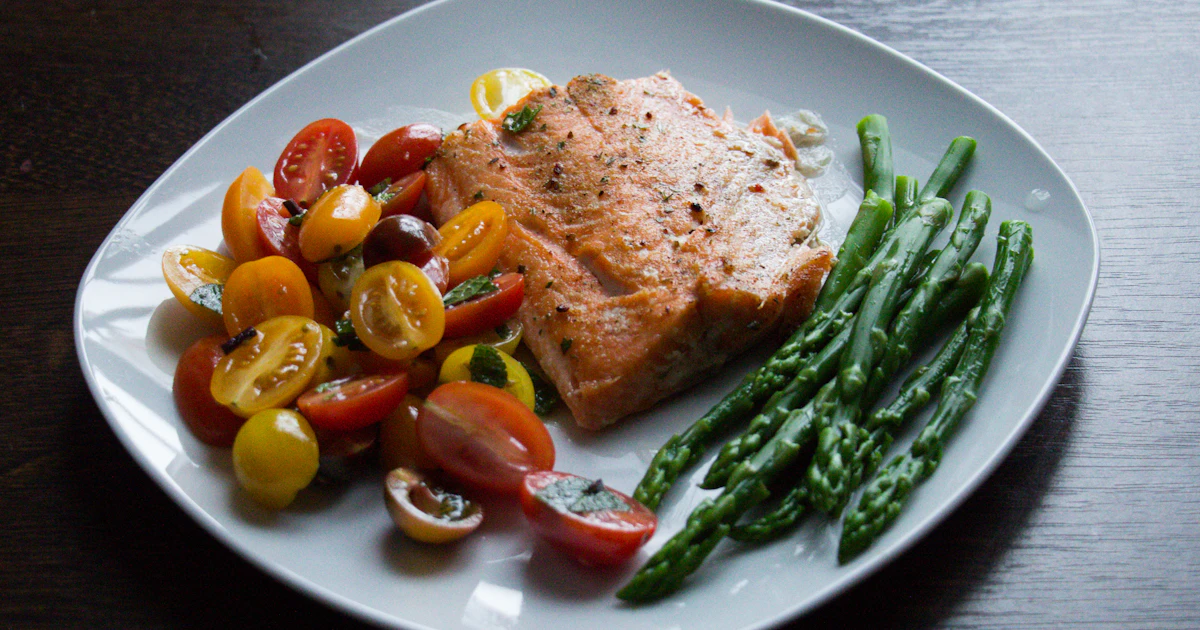
| Lunch | Large salad with grilled salmon, chickpeas, olive oil, seeds and plenty of leaves | Protein plus roughly 10 g fiber; omega-3s; no post-meal crash |
| Afternoon | Greek yogurt with ground flaxseed, or hummus with crunchy vegetables | Protein-anchored snack rather than a biscuit, so the 4 p.m. dip does not arrive |
| Dinner | Tofu or chicken stir-fry with mixed vegetables and a modest portion of rice or quinoa | Includes soy in whole-food form; carbohydrate placed in the evening can help sleep in some women |
| After dinner | A ten-minute walk | Blunts the post-meal glucose peak without any change to the meal itself |
| Evening | Herbal tea rather than a second glass of wine | Alcohol close to bedtime fragments sleep and provokes night sweats in many women |
Alcohol and caffeine
These two deserve their own section because they are the most common reversible triggers we see, and because both are usually discussed too vaguely to act on.
Alcohol
Alcohol triggers vasomotor symptoms in a large proportion of women through vasodilation, and it reliably fragments sleep architecture: it shortens sleep onset but suppresses REM and increases waking in the second half of the night, which is precisely when perimenopausal sleep is already fragile. It is metabolized by the liver, which is also where estrogen is conjugated for clearance, and it is an established risk factor for breast cancer in a dose-dependent relationship with no identified safe threshold (National Cancer Institute). None of that requires abstinence, but it does mean alcohol is the highest-yield experiment available: two weeks without it, with a nightly note on sleep and flushing, usually settles the question for an individual.
Caffeine
Caffeine has a half-life of roughly five hours, meaning a 3 p.m. coffee still has a quarter of its dose circulating at 1 a.m. In perimenopause, when sleep-maintenance waking is already common, that matters more than it did a decade earlier. Caffeine has also been associated with more bothersome vasomotor symptoms in survey data, though the association is inconsistent. A reasonable rule is to keep caffeine before noon and treat the afternoon slump as a signal about the previous meal rather than a reason for another cup.
What to limit, and what to skip
- Ultra-processed foods and liquid sugar. The main practical issue is that they displace protein and fiber while producing the largest glucose swings.
- Very low-calorie dieting. Aggressive restriction accelerates the loss of lean mass this decade already threatens, and it rarely holds.
- Long-term very low carbohydrate eating without a reason. It suits some women, but sustained carbohydrate restriction can worsen sleep and training recovery in others, and it frequently cuts fiber in half.
- Elimination diets built on IgG food sensitivity panels. IgG antibodies to food reflect exposure rather than intolerance, and mainstream allergy bodies including the American Academy of Allergy, Asthma and Immunology do not support their use for diagnosing food sensitivity. Symptom-led trials supervised by a clinician are a better route when food reactions are genuinely suspected, and our gut health page covers how those are run.
- "Hormone detox" cleanses and juice resets. They remove protein and fiber for several days, which is the opposite of what this stage requires.
- Anything that makes eating out impossible. A plan you cannot follow at a Texas barbecue or a client dinner is a plan you will abandon by week three.
Interactive tool
Perimenopause plate check
Tick the habits that describe your usual day to see the change this article recommends for each one.
Where diet fits alongside testing and treatment
Food changes are easier to sustain when you can see what they are moving. The markers worth having before and after a serious dietary change are fasting glucose and insulin, HbA1c, a lipid panel, ferritin and a thyroid panel with antibodies, since thyroid disease and iron deficiency mimic much of what gets blamed on perimenopause. Sex hormones are interpreted against cycle timing rather than read in isolation, as our guide to hormone testing for women explains.
Diet also does not replace treatment where symptoms are severe. The Menopause Society continues to position hormone therapy as the most effective option for moderate to severe vasomotor symptoms in appropriate candidates, with the decision individualized by age, time since the final period and personal history (The Menopause Society). Nutrition works alongside that, not against it. Our perimenopause and menopause care page describes how both sit in one plan, the complete functional medicine guide to perimenopause gives the wider context, and the functional medicine process page explains how a workup at Interlinked Wellness is structured for women across Texas.
FAQ
Does a perimenopause diet help hot flashes?
Modestly and indirectly for most women. Soy isoflavones show a small reduction in frequency over placebo in meta-analyses, and reducing alcohol often produces a noticeable change within a fortnight. What diet does reliably improve is the metabolic layer underneath: glucose stability, lipids, lean mass and energy. If hot flashes are severe, food is a supporting measure rather than the treatment.
Should I cut carbohydrates?
Cut refined carbohydrate and liquid sugar, not carbohydrate as a category. Quality, quantity and context matter more than the macronutrient label: the same bowl of rice behaves differently when it follows protein and vegetables, and legumes and whole grains carry the fiber that supports estrogen clearance and cholesterol. Very low carbohydrate eating suits some women and worsens sleep in others.
Is intermittent fasting good in perimenopause?
It can work for women who still hit their protein target and sleep well, and it goes badly for women who are under-eating protein, training hard or sleeping poorly. The narrow eating window often makes 100 grams of protein a day impossible, which undermines the lean mass this stage is already losing. If you use it, protect protein first and stop if sleep or recovery deteriorates.
How much soy is reasonable to eat?
Trials of isoflavones for hot flashes typically use amounts equivalent to one or two servings of whole soy foods daily, such as a block of tofu, a cup of edamame or a glass of soy milk. That is an ordinary dietary amount rather than a supplement dose. Concentrated extracts are a different conversation, particularly with a personal history of hormone-receptor-positive breast cancer.
How long before dietary changes show up?
Energy and post-meal crashes often shift within two weeks. Sleep and bloating tend to follow over four to six weeks. Body composition, lipids and HbA1c move over three months, which is why we re-test at that interval rather than sooner. Weighing daily and judging in week one produces false conclusions in both directions.
References
- Harlow SD, et al. The Journal of Clinical Endocrinology and Metabolism. 2012. https://pubmed.ncbi.nlm.nih.gov/22344196/
- Endocrine Society. Endocrine Society. 2022. https://www.endocrine.org/clinical-practice-guidelines
- NIH Office of Dietary Supplements. National Institutes of Health. 2026. https://ods.od.nih.gov/factsheets/Calcium-HealthProfessional/
- National Center for Complementary and Integrative Health. National Institutes of Health. 2017. https://www.nccih.nih.gov/health/menopausal-symptoms-in-depth
- National Cancer Institute. National Institutes of Health. 2026. https://www.cancer.gov/about-cancer/causes-prevention/risk/alcohol
About the author

Anna Evans MSN, APRN, FNP-C
Founder, Interlinked Wellness
Anna Evans, MSN, APRN, FNP-C is a board-certified Family Nurse Practitioner licensed in Texas. She founded Interlinked Wellness, a virtual functional medicine practice serving women across Texas from offices in Dallas and Austin. Her clinical focus is perimenopause, hormone imbalance, gut health, thyroid and autoimmune conditions, and chronic fatigue.
More about Anna · Schedule a consultation · LinkedIn · Instagram
Medical disclaimer. The information on this page is provided for general education and is not individualized medical advice. At Interlinked Wellness, Anna Evans, MSN, APRN, FNP-C, provides personalized care based on your health history, symptoms, concerns, and goals. An individual consultation allows Anna to evaluate your specific situation and recommend an appropriate approach to care. Reading this page alone does not establish a patient-provider relationship. If you are experiencing a medical emergency, call 911 or your local emergency services.
Join Anna on a virtual wellness journey and unlock your full potential.