The best probiotic for a woman is the specific strain studied for the outcome she wants, not the product with the highest colony count. Probiotic effects are strain-specific, which means Lacticaseibacillus rhamnosus GG and a different rhamnosus strain can behave nothing alike, and a label that names only a species tells you very little. This guide sets out what individual strains have actually been studied for, what the American Gastroenterological Association concluded in its 2020 clinical guidance, how the vaginal and gut communities interact, when probiotics are the wrong move, and how to read a label without being sold on numbers that do not mean what they appear to mean.
Free interactive tool
Probiotic bottle and fit check
Tick what applies to you and what the label on your bottle shows to see what the article says about each one, plus how to run a proper trial.
In this article
- Why strain designation, not species name, is the unit of evidence
- A strain-by-strain table of what has been studied and how strong the evidence is
- The vaginal and gut axis, and what changes during perimenopause
- What the AGA 2020 guidance recommends for and against
- Why higher CFU counts are not a ranking of potency
- Situations where probiotics can make things worse
- How to run a proper eight-week trial instead of guessing
Strain is the unit of evidence, not species
A probiotic organism is named in three parts: genus, species and strain designation. In Lacticaseibacillus rhamnosus GG, the GG is the part that carries the clinical evidence. Trials are run on strains, and the results do not transfer across the species. A product listing "Lactobacillus acidophilus, 10 billion CFU" with no strain code is unmatched to any published trial.
There is a naming complication worth knowing about. In 2020 the genus Lactobacillus was reclassified into 25 genera on genomic grounds, so familiar organisms acquired new names: L. rhamnosus became Lacticaseibacillus rhamnosus, L. reuteri became Limosilactobacillus reuteri, and L. plantarum became Lactiplantibacillus plantarum. The strain codes did not change. If a label uses old and new names inconsistently, that is a labeling lag rather than a different organism.
The other definition that matters comes from the International Scientific Association for Probiotics and Prebiotics: a probiotic is a live microorganism that, in adequate amounts, confers a health benefit. Dead organisms, undefined blends and products without a documented count at end of shelf life do not meet that bar, whatever the front of the box says.
Strain by strain: what has actually been studied
The table below summarizes strains with published human trial data relevant to women. Evidence strength reflects the volume and quality of trials, not a promise of individual benefit, and none of this replaces a conversation with your own clinician about whether a trial is appropriate for you.
| Strain | Studied for | Evidence strength | Notes |
|---|---|---|---|
| Lacticaseibacillus rhamnosus GG | Antibiotic-associated diarrhea, acute infectious diarrhea | Moderate to low quality for antibiotic-associated diarrhea, clearer in children than adults | One of the most studied single strains, but a large US trial in young children with acute gastroenteritis found no benefit |
| Saccharomyces boulardii CNCM I-745 | Antibiotic-associated diarrhea, C. difficile prevention in selected settings | Consistent benefit for antibiotic-associated diarrhea in a 21-trial meta-analysis; C. difficile benefit seen only in children | A yeast, so unaffected by concurrent antibiotics. Avoid with central venous catheters or significant immunosuppression |
| Bifidobacterium longum subsp. infantis 35624 | Irritable bowel syndrome symptoms, bloating | Mixed: a 2017 meta-analysis found no clear benefit from the single strain | One of the few single strains with IBS-specific data; a 2026 strain-level meta-analysis was more favorable |
| Lactiplantibacillus plantarum 299v | IBS pain and bloating; iron absorption in some studies | Low certainty | A 2023 meta-analysis rated its evidence for IBS symptoms as low certainty |
| Lacticaseibacillus rhamnosus GR-1 with Limosilactobacillus reuteri RC-14 | Recurrent bacterial vaginosis, vaginal flora after antibiotic treatment | Low certainty for oral probiotics as a group | Studied as an oral route to vaginal colonization |
| Lactobacillus crispatus CTV-05 | Recurrent bacterial vaginosis, delivered vaginally | Moderate for vaginal probiotics as a group; one phase 2b trial for this strain | A live biotherapeutic product, not a general supplement |
| Bifidobacterium lactis HN019 and BB-12 | Transit time and constipation | Some benefit for B. lactis in a meta-analysis, with high risk of bias | Effects are modest; a dose-ranging HN019 trial found no overall change in transit time |
| Multi-strain formulations of the VSL/De Simone type | Pouchitis maintenance | Low certainty in a Cochrane review, though pouchitis is its best-studied use | Studied in a narrow clinical population; not a general wellness product |
Typical studied doses run from roughly one billion to fifty billion CFU per day depending on the strain and indication, with the trial dose being the one that matters rather than the largest number available. Bring the strain and the indication to your clinician rather than the brand.
The vaginal and gut axis
The vaginal microbiome is unusual: a healthy premenopausal community is typically dominated by a single Lactobacillus species, most protectively L. crispatus, which produces lactic acid and keeps pH low. Diversity is desirable in the gut and generally unfavorable in the vagina, which is the opposite of what most wellness content implies.
The gut acts as a reservoir. Organisms can travel from the rectum to the vagina, which is the rationale behind oral probiotics for vaginal outcomes and the reason GR-1 and RC-14 were studied by the oral route. Trial results are mixed and the effect sizes are modest, so oral probiotics are best understood as a possible adjunct to treatment of recurrent bacterial vaginosis, not a replacement for diagnosis and antibiotic therapy where indicated.
Perimenopause changes the terrain. As estrogen declines, vaginal epithelial glycogen falls, and glycogen is the substrate lactobacilli depend on. The community tends to shift toward a lower-lactobacillus state, and that state has been linked to signs of vaginal atrophy, which may help explain why vaginal symptoms cluster during the transition. Estrogen therapy has been shown to shift the community back toward lactobacillus dominance, which is a conversation to have with your clinician rather than a supplement decision. Our menopause and perimenopause page covers the wider picture.
What the AGA guidance actually says
The American Gastroenterological Association published clinical practice guidelines on probiotics in gastrointestinal disorders in 2020, and its conclusions are more restrained than the supplement aisle suggests. The guideline made conditional recommendations for specific formulations in pouchitis, for prevention of C. difficile infection in patients on antibiotics in some settings, and for preterm low-birth-weight infants. For irritable bowel syndrome, Crohn's disease and ulcerative colitis, it recommended probiotic use only in the context of a clinical trial, citing insufficient evidence.
That is not a verdict that probiotics do nothing. It is a statement that the evidence base is strain-specific and indication-specific, and that most marketed products have not been tested for what they are sold for. Reading it alongside the strain table above is the useful move: a small number of strains have real data for a small number of outcomes.
What about probiotics for leaky gut?
Increased intestinal permeability is a real, measurable phenomenon, and it is one of the most heavily marketed reasons to buy a probiotic. The evidence is narrower than the claims. Small trials of strains including Lactiplantibacillus plantarum 299v and Lacticaseibacillus rhamnosus GG have reported changes in permeability markers such as lactulose-mannitol ratios or serum zonulin, but the studies are short, the populations differ, and the zonulin assays used are themselves contested. No probiotic has been shown to reverse a permeability problem as a standalone treatment.
The interventions with better mechanistic support are the ones that raise butyrate production and reduce the insult: fermentable fiber, removing regular alcohol and unnecessary NSAIDs, and treating any underlying inflammatory or infectious driver. The article on leaky gut signs and testing sets out what can and cannot currently be measured.
CFU myths and label literacy
- More CFU is not more effective. The right dose is whatever the trial used for that strain. Fifty billion of an unstudied strain is not superior to ten billion of a studied one.
- "At time of manufacture" is the phrase to look for. Viable counts fall over shelf life. A guaranteed count through the expiry date is a meaningfully stronger claim.
- Multi-strain is not automatically better. Combination products are rarely tested as a combination, and strains can compete. The exception is a formulation studied as a fixed blend.
- Delayed-release and enteric coating claims are usually untested. Some strains survive gastric acid perfectly well without them.
- Supplements are not premarket-approved. Dietary supplements are regulated by the FDA as food rather than medicine, so no agency verifies the contents before sale. Independent third-party verification is the practical substitute, and identity testing of the labeled strain is the part that matters.
Storage and viability
Live organisms die with heat and moisture. Products labeled for refrigeration lose viability at room temperature, and a package left in a mailbox or a car in a Texas summer can arrive functionally dead with no visible change. Shelf-stable products are formulated for ambient storage, and spore-forming Bacillus strains genuinely tolerate heat, but they are a different category with a thinner clinical evidence base. Buy from suppliers who ship cold when the label requires it, keep bottles closed and away from steam, and treat a discounted bottle sitting on a warm shelf with suspicion.
When probiotics are the wrong move
Four situations call for caution rather than a trial.
- Suspected small intestinal bacterial overgrowth. Adding organisms upstream can worsen distension. A published case series linked probiotic use with brain fog and D-lactic acidosis in patients with small-bowel overgrowth, with symptoms resolving after stopping and treating the overgrowth. If distension starts within an hour of eating, read the article on SIBO symptoms and testing first.
- Significant immunosuppression, central venous catheters or critical illness. Fungemia and bacteremia from probiotic organisms are rare but documented. This is a clinician decision, not a self-care one.
- Histamine sensitivity. Some strains produce histamine and others degrade it. Women who react to fermented foods sometimes react to certain strains for the same reason.
- Immediately after antibiotics, expecting faster recovery. A 2018 study in Cell by Suez and colleagues found that a probiotic mixture after antibiotics delayed the return of the person's own microbiome compared with no intervention, while autologous stool transplant restored it fastest. The finding is not the last word, but it undermines the routine post-antibiotic recommendation.
Interactive tool
Probiotic bottle and fit check
Tick what applies to you and what the label on your bottle shows to see what the article says about each one, plus how to run a proper trial.
Food first, then targeted strains
Most gut supplement questions are asked in the wrong order. Sonnenburg and Sonnenburg make the case in The Good Gut that Western diets are low in microbiota-accessible carbohydrates, the fermentable fibers that resident gut microbes feed on, and their research links a low-MAC diet to an altered microbiome that makes fewer short-chain fatty acids. Feeding what is already there is a sensible place to start.
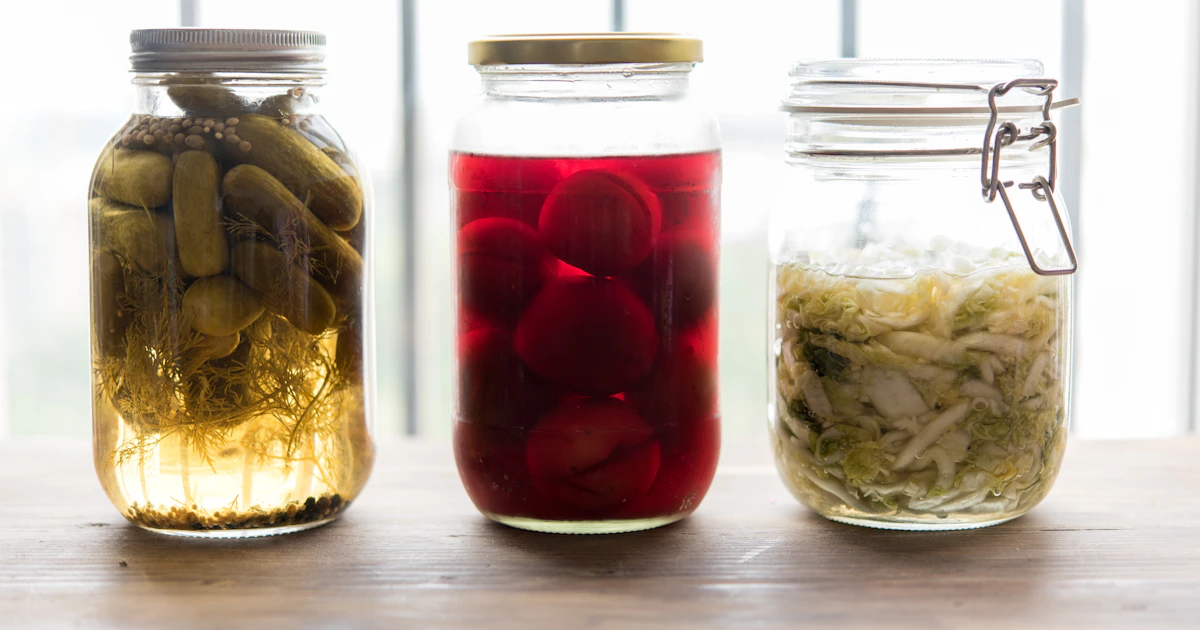
In practical order: fiber diversity first, covered in the article on the best foods for gut health; then fermented foods, where a randomized trial showed increased microbial diversity and lower inflammatory markers; then removing the inputs working against you, principally regular alcohol, routine NSAIDs and a diet built on ultra-processed food; and only then a strain chosen for a specific problem.
How to run an eight-week trial properly
If a strain is worth trying, run it as an experiment rather than a hope.
- Define the target symptom and score it daily on a simple scale for one week before starting.
- Change one variable. Starting a probiotic, a new fiber and an elimination diet in the same week guarantees an uninterpretable result.
- Use the strain and dose studied for your target, and check the label carries the strain code.
- Give it six to eight weeks. Transit and bloating changes often appear within two to four weeks; nothing at eight weeks is a result.
- Stop if symptoms worsen consistently for more than a week, and reconsider the underlying diagnosis.
If the pattern keeps returning whatever you take, the question is what is driving it. Stool testing such as the GI-MAP can identify overgrowth, low fiber-fermenting species or inflammatory markers that change the plan. Our digestive and gut health page outlines the conditions we work with, and the functional medicine process page explains how a workup at Interlinked Wellness is structured.
FAQ
Should women take a probiotic every day?
There is no evidence that daily probiotic use benefits healthy women without a specific indication, and current AGA guidance does not support routine use for most gastrointestinal conditions. A defined strain for a defined problem, run as a time-limited trial, is a better use of money than an indefinite general-wellness product. Daily fermented foods and a wide range of plant fibers have better support for general gut maintenance.
Do probiotics help with vaginal health and recurrent BV?
Some strains have relevant data, particularly the GR-1 and RC-14 combination taken orally and L. crispatus CTV-05 delivered vaginally, which was studied in a randomized trial for recurrent bacterial vaginosis. Effects are modest and results across trials are inconsistent, so probiotics are best positioned as a possible adjunct alongside proper diagnosis and treatment, not as a substitute. Recurrent symptoms warrant testing rather than repeated self-treatment.
Do I need to refrigerate my probiotic?
Follow the label. Products formulated as shelf-stable, including spore-based Bacillus formulations, do not need refrigeration; those labeled for refrigeration lose viable organisms at room temperature, and heat exposure in transit is a common and invisible cause of a product doing nothing. Look for a guaranteed count through the expiry date rather than at manufacture.
Can probiotics make bloating worse?
Yes. Mild bloating in the first one to two weeks is common and often settles. Bloating that intensifies, begins within an hour of eating, or comes with brain fog raises the possibility of bacterial overgrowth, where adding organisms is counterproductive. Stopping the product and reassessing is the right response, rather than switching to a higher count.
References
- Zheng J, et al. International Journal of Systematic and Evolutionary Microbiology. 2020. https://pubmed.ncbi.nlm.nih.gov/32293557/
- Hill C, et al. Nature Reviews. Gastroenterology & Hepatology. 2014. https://pubmed.ncbi.nlm.nih.gov/24912386/
- Szajewska H, et al. Alimentary Pharmacology & Therapeutics. 2015. https://pubmed.ncbi.nlm.nih.gov/26365389/
- Schnadower D, et al. The New England Journal of Medicine. 2018. https://pubmed.ncbi.nlm.nih.gov/30462938/
- Szajewska H, et al. Alimentary Pharmacology & Therapeutics. 2015. https://pubmed.ncbi.nlm.nih.gov/26216624/
- Yuan F, et al. Current Medical Research and Opinion. 2017. https://pubmed.ncbi.nlm.nih.gov/28166427/
- Maslennikov R, et al. Journal of Clinical Medicine. 2026. https://pubmed.ncbi.nlm.nih.gov/41682832/
- Vonderheid SC, et al. Nutrients. 2019. https://pubmed.ncbi.nlm.nih.gov/31816981/
- Goodoory VC, et al. Gastroenterology. 2023. https://pubmed.ncbi.nlm.nih.gov/37541528/
- Gardella B, et al. Journal of Lower Genital Tract Disease. 2026. https://pubmed.ncbi.nlm.nih.gov/42611724/
- Dimidi E, et al. The American Journal of Clinical Nutrition. 2014. https://pubmed.ncbi.nlm.nih.gov/25099542/
- Ibarra A, et al. Gut Microbes. 2018. https://pubmed.ncbi.nlm.nih.gov/29227175/
- Nguyen N, et al. The Cochrane Database of Systematic Reviews. 2019. https://pubmed.ncbi.nlm.nih.gov/31785173/
- Mirmonsef P, et al. Menopause. 2015. https://pubmed.ncbi.nlm.nih.gov/25535963/
- Brotman RM, et al. Menopause. 2014. https://pubmed.ncbi.nlm.nih.gov/24080849/
- Muhleisen AL, et al. Maturitas. 2016. https://pubmed.ncbi.nlm.nih.gov/27451320/
- Su GL, et al. Gastroenterology. 2020. https://pubmed.ncbi.nlm.nih.gov/32531291/
- Rao SSC, et al. Clinical and Translational Gastroenterology. 2018. https://pubmed.ncbi.nlm.nih.gov/29915215/
- Suez J, et al. Cell. 2018. https://pubmed.ncbi.nlm.nih.gov/30193113/
- Sonnenburg ED, et al. Cell Metabolism. 2014. https://pubmed.ncbi.nlm.nih.gov/25156449/
- Wastyk HC, et al. Cell. 2021. https://pubmed.ncbi.nlm.nih.gov/34256014/
- Cohen CR, et al. The New England Journal of Medicine. 2020. https://pubmed.ncbi.nlm.nih.gov/32402161/
About the author

Anna Evans MSN, APRN, FNP-C
Founder, Interlinked Wellness
Anna Evans, MSN, APRN, FNP-C is a board-certified Family Nurse Practitioner licensed in Texas. She founded Interlinked Wellness, a virtual functional medicine practice serving women across Texas from offices in Dallas and Austin. Her clinical focus is perimenopause, hormone imbalance, gut health, thyroid and autoimmune conditions, and chronic fatigue.
More about Anna · Schedule a consultation · LinkedIn · Instagram
Medical disclaimer. The information on this page is provided for general education and is not individualized medical advice. At Interlinked Wellness, Anna Evans, MSN, APRN, FNP-C, provides personalized care based on your health history, symptoms, concerns, and goals. An individual consultation allows Anna to evaluate your specific situation and recommend an appropriate approach to care. Reading this page alone does not establish a patient-provider relationship. If you are experiencing a medical emergency, call 911 or your local emergency services.
Join Anna on a virtual wellness journey and unlock your full potential.