Fermented foods support gut health primarily by increasing microbial diversity, and a 10-week randomized trial at Stanford found that a diet high in fermented foods raised diversity and lowered 19 inflammatory proteins, while a high-fiber diet did not do the same within that window. That trial, published by Wastyk and colleagues in Cell in 2021 (Stanford Medicine), is the strongest human evidence available for eating fermented foods rather than taking a supplement. It is also a single 36-person study, so the sensible reading is encouraging rather than conclusive. This guide covers which foods actually contain live microbes, how much to eat, how to build up without making symptoms worse, who should be cautious, and how to make your own.
Free interactive tool
Where to start with ferments
Answer three quick questions about how your body responds to food to see which starting approach from this article fits you best.
In this article
- What the Stanford fermented-food trial measured, and what it did not
- Which supermarket products contain live cultures and which are pasteurized
- A realistic daily amount and a four-week ramp that avoids symptom flares
- The histamine caveat that explains why some women feel worse on ferments
- Why fermented foods can backfire in suspected SIBO
- Label checks for kefir, kraut, kimchi and kombucha
- Basic home fermentation and the safety rules that matter
What the Stanford trial actually showed
Thirty-six healthy adults were randomized to either a high-fermented-food diet or a high-fiber diet for 10 weeks, with blood and stool sampled throughout. The fermented-food group ramped up to roughly six servings a day. Their overall microbial diversity increased, which is unusual because adult diversity is normally quite stable, and 19 inflammatory proteins in blood decreased, including interleukin-6. The high-fiber group showed changes in microbial enzyme activity but no diversity increase over the same period.
Three caveats. The sample was small and the participants were healthy, so results may not transfer to people with active gut disease. Ten weeks is short. And the fermented-food arm ate a much larger quantity than most people manage, so the dose that produced the effect was substantial. The International Scientific Association for Probiotics and Prebiotics published a consensus statement on fermented foods in 2021 that reaches a similar conclusion: mechanistically plausible, promising early human data, not yet a prescription.
What the trial does not show is that fermented foods replace fiber. The fiber arm changed in different ways, and longer studies may well show diversity effects from fiber that 10 weeks could not capture. Both belong in the diet, which is why the article on the best foods for gut health treats fiber and ferments as complements.
Which foods actually contain live microbes
Fermented does not automatically mean live. Heat processing after fermentation kills the organisms while keeping the flavor, and many products sold as fermented were never microbially active in the first place.
| Food | Live cultures? | What to check |
|---|---|---|
| Yogurt | Yes, if labeled live and active cultures | Added sugar; some brands add cultures back after heat treatment |
| Kefir | Yes, and typically a broader strain range than yogurt | Sugar content in flavored versions |
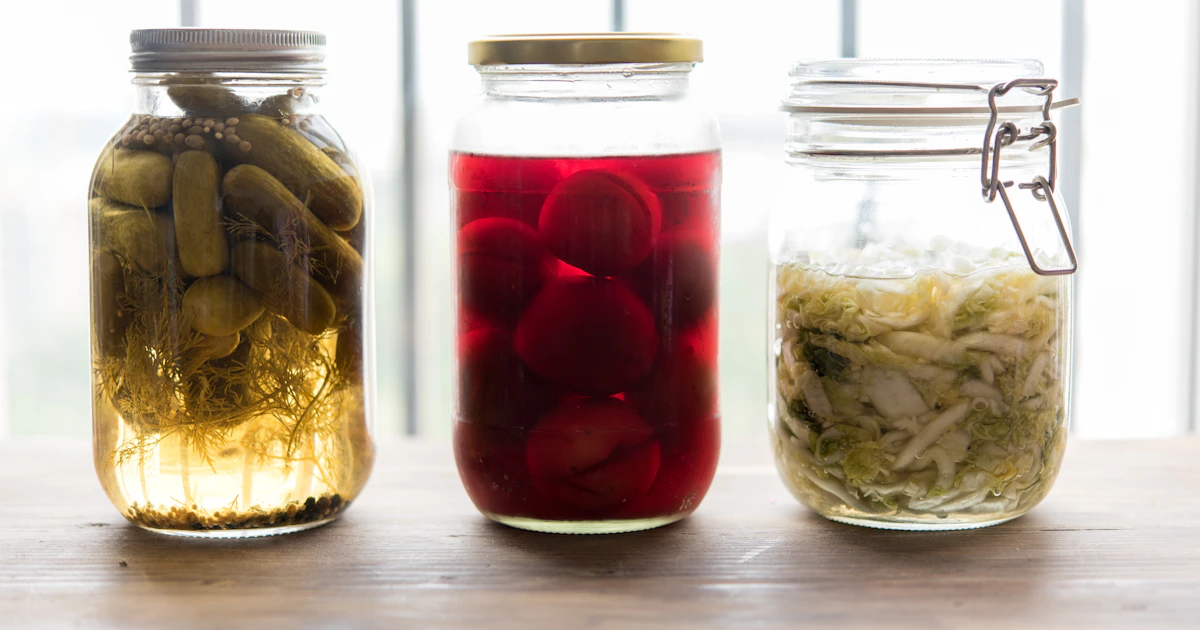
| Sauerkraut and kimchi | Only refrigerated, unpasteurized versions | Shelf-stable jars are pasteurized; vinegar in the ingredients means pickled, not fermented |
| Miso, natto, tempeh | Miso and natto yes; tempeh loses most organisms when cooked | Add miso off the heat to preserve cultures |
| Kombucha | Usually yes | Sugar per serving; small alcohol content |
| Sourdough bread | No, baking kills the culture | Still useful: sourdough fermentation can lower fructan content |
| Supermarket pickles | Usually not | Brine-fermented pickles are refrigerated and list salt, not vinegar |
How much per day, and how to build up
The trial dose was up to six servings a day, but that was a supervised research protocol. A practical target for most women is one to two servings daily, eaten consistently, with a slow ramp from a much smaller starting point. A serving is roughly half a cup of yogurt or kefir, two tablespoons of sauerkraut or kimchi, one teaspoon of miso, or a small glass of kombucha.
Consistency beats volume. Most food-borne organisms are transient, meaning they pass through rather than colonize, so the effect depends on regular intake rather than an occasional large serving.
| Week | Amount | Notes |
|---|---|---|
| 1 | One teaspoon of kraut or 2 tablespoons of kefir daily | Deliberately small. Track bloating, stool change, headache, flushing |
| 2 | Roughly half a serving daily | Hold at this level for a full week if symptoms appear |
| 3 | One full serving daily | Add a second type of ferment rather than more of the same |
| 4 | One to two servings daily, from two or three sources | Variety of species matters more than total volume |
The histamine caveat
Fermentation produces biogenic amines, including histamine, as bacteria break down amino acids. Aged and long-fermented foods are among the highest-histamine items in the diet: aged cheese, cured meats, mature sauerkraut, kombucha, soy sauce and red wine.
Most people clear dietary histamine without difficulty using diamine oxidase in the gut lining. Where that capacity is reduced, by genetics, gut inflammation, certain medications or alcohol, symptoms can follow within minutes to a couple of hours: flushing, headache, nasal congestion, hives, itching, palpitations, loose stool or a racing feeling at night. Histamine intolerance remains a clinical rather than laboratory diagnosis, since serum DAO testing is not reliable enough to confirm it, and a supervised low-histamine trial with reintroduction is still the most informative approach.
There is a plausible perimenopause overlap worth naming carefully. In cell studies, estradiol can activate mast cells, the immune cells that store histamine, and some women describe histamine-type symptoms that track with cycle phase. The mechanistic literature is stronger than the clinical trial literature here, so this belongs in the category of pattern worth investigating rather than established fact. Our guide to perimenopause covers the wider symptom picture.
If ferments consistently trigger those symptoms, the practical options are shorter-fermented choices such as fresh kefir cultured for under 24 hours, smaller amounts, and avoiding the highest-amine foods while the underlying gut picture is addressed.
When fermented foods make symptoms worse
Fermented foods are not universally beneficial, and two situations deserve caution.
The first is suspected small intestinal bacterial overgrowth. When bacterial density in the small bowel is already excessive, adding fermentable substrate and more organisms upstream of the colon can increase gas production and distension. Timing can be a clue: some clinicians read bloating that starts soon after eating, rather than several hours later, as a hint that the small bowel is involved, though timing alone cannot confirm it. If that describes you, read the article on SIBO symptoms and testing before scaling up.
The second is active inflammatory disease or a recent gastrointestinal infection, where the priority is diagnosis rather than dietary experimentation. The American Gastroenterological Association guidance published in 2020 recommended against routine probiotic use for most gastrointestinal conditions outside specific indications and clinical trials, noting the evidence for most products is thin. That guidance addressed supplements rather than foods, but the underlying caution transfers: a live-organism intervention is still an intervention.
Practically, symptoms that worsen consistently at a low dose are a signal to stop and investigate, not to push through. Persistent chronic bloating has root causes that fermented food will not resolve.
Interactive tool
Where to start with ferments
Answer three quick questions about how your body responds to food to see which starting approach from this article fits you best.
Reading labels and choosing products
- Buy from the refrigerated section. Shelf-stable kraut and kimchi have been pasteurized, which is why they can sit at room temperature.
- Check for vinegar. Vinegar in the ingredient list means the product was pickled rather than lacto-fermented. Fermented versions list vegetables, salt and often spices.
- Check the sugar. Flavored kefir and some kombucha carry as much added sugar as a soft drink, which undermines the point.
- Look for cloudiness and bubbles. In brine ferments these are signs of activity, not spoilage.
- Rotate brands and types. Different products carry different species, and diversity of exposure appears to matter more than any single product.
What a good option looks like, category by category
| Category | Choose | Red flags |
|---|---|---|
| Yogurt | Plain whole-milk or Greek, live and active cultures on the label, single-digit sugar per serving | Fruit-on-the-bottom styles, heat-treated after culturing |
| Kefir | Plain, refrigerated, multiple named strains, thin pourable texture | Flavored varieties carrying 15 grams or more of sugar per cup |
| Sauerkraut and kimchi | Refrigerated, cloudy brine, ingredients limited to vegetables, salt and spice | Vinegar, sugar, sodium benzoate, or a shelf-stable jar |
| Kombucha | Under 5 grams of sugar per serving, refrigerated, sediment visible | Dessert-flavored versions; caution if you are sensitive to caffeine or amines |
| Miso and natto | Refrigerated tubs, unpasteurized where stated | Instant soup sachets, which are usually heat-treated and high in sodium |
No supplement or brand is required for any of this, and no product on a shelf has been shown to reproduce the Stanford trial result on its own. Rotating two or three of the categories above through a normal week is closer to what the trial actually tested than loyalty to one product.
Making your own: the basics and the safety rules
Vegetable fermentation is simple and inexpensive. For sauerkraut, follow the tested USDA sauerkraut recipe rather than a rough ratio: 3 tablespoons of canning or pickling salt for every 5 pounds of shredded cabbage, mixed and packed firmly until the salt draws out the juice, then held under the brine with a plate and weights. If the juice does not cover the cabbage, top it up with boiled and cooled brine made with 1 1/2 tablespoons of salt per quart of water. At 70 to 75°F, kraut is fully fermented in about 3 to 4 weeks; at 60 to 65°F it can take 5 to 6 weeks. Below 60°F it may not ferment, and above 75°F it may turn soft. Fully fermented kraut keeps tightly covered in the refrigerator for several months.
Three safety rules matter. Everything must stay submerged, because mold grows on exposed material and a moldy batch is discarded rather than scraped. Use non-iodized salt and clean equipment, though sterilization is not necessary. And follow tested guidance for anything canned or preserved beyond simple refrigerated ferments, from a source such as the National Center for Home Food Preservation. Acidic lacto-fermented vegetables kept cold are low risk; improvised canning is not.
Milk kefir is the other easy option: add grains to milk, leave at room temperature for 12 to 24 hours, strain, repeat. A shorter ferment produces a milder, lower-amine result, which is useful if histamine is a concern.
Where fermented foods fit in a wider plan
Fermented foods are one input among several. Stool testing such as the GI-MAP can show whether fiber-fermenting species are low, whether inflammatory markers are raised, and whether an organism needs addressing first. In practice, women who arrive after years of restrictive eating usually need a slow, structured reintroduction rather than a jump to six servings a day, and the sequence matters more than the enthusiasm.
It also helps to remove the inputs working against you at the same time, which the companion piece on the worst foods for gut health covers. If bloating, reflux or irregular bowels have persisted for months, our digestive and gut health page describes the conditions we work with, and the functional medicine process page explains how a workup is structured.
FAQ
How long does it take fermented foods to improve gut health?
The Stanford trial measured diversity and inflammatory changes across 10 weeks with a steadily increasing dose, and differences were apparent by the end of that period. Digestive symptom changes often appear sooner, within two to four weeks of consistent daily intake. If nothing has changed after eight to ten weeks of genuine consistency, the limiting factor is probably something other than fermented-food intake.
Are fermented foods better than probiotic supplements?
They are different tools. Supplements deliver defined strains at defined doses, which is what strain-specific clinical trials study. Fermented foods deliver a broader and less predictable mix along with the food matrix itself, and the Stanford trial is the strongest human evidence for the food route affecting diversity and inflammatory markers. Current AGA guidance is cautious about routine supplement use for most gastrointestinal conditions, which is one reason a food-first approach is reasonable for general gut support.
Can fermented foods cause bloating?
Yes, particularly at the start or at high doses. Some of that is normal adjustment as fermentation activity in the colon changes, and it usually settles within one to two weeks at a steady amount. Bloating that begins soon after eating, worsens as the dose rises, or comes with reflux and belching may point to the small bowel rather than the colon, and is worth getting assessed for bacterial overgrowth before increasing intake.
Do fermented foods help with perimenopause symptoms?
There is no trial showing that fermented foods relieve hot flashes or other vasomotor symptoms. The plausible connection runs through the gut microbiome's role in estrogen metabolism and through general inflammatory tone, both of which are areas of active research rather than settled clinical practice. Fermented foods are a reasonable part of a diet during perimenopause; they are not a treatment for it.
References
- Stanford Medicine. Stanford Medicine News Center. 2021. https://med.stanford.edu/news/all-news/2021/07/fermented-food-diet-increases-microbiome-diversity-lowers-inflammation
- Wastyk HC, et al. Cell. 2021. https://pubmed.ncbi.nlm.nih.gov/34256014/
- Marco ML, et al. Nature Reviews. Gastroenterology & Hepatology. 2021. https://pubmed.ncbi.nlm.nih.gov/33398112/
- Menezes LAA, et al. International Journal of Food Sciences and Nutrition. 2021. https://pubmed.ncbi.nlm.nih.gov/33653200/
- Derrien M, et al. Trends in Microbiology. 2015. https://pubmed.ncbi.nlm.nih.gov/25840765/
- Comas-Basté O, et al. Biomolecules. 2020. https://pubmed.ncbi.nlm.nih.gov/32824107/
- Zaitsu M, et al. Molecular Immunology. 2007. https://pubmed.ncbi.nlm.nih.gov/17084457/
- Su GL, et al. Gastroenterology. 2020. https://pubmed.ncbi.nlm.nih.gov/32531291/
- National Center for Home Food Preservation. University of Georgia. n.d.. https://nchfp.uga.edu/how/ferment/sauerkraut
About the author

Anna Evans MSN, APRN, FNP-C
Founder, Interlinked Wellness
Anna Evans, MSN, APRN, FNP-C is a board-certified Family Nurse Practitioner licensed in Texas. She founded Interlinked Wellness, a virtual functional medicine practice serving women across Texas from offices in Dallas and Austin. Her clinical focus is perimenopause, hormone imbalance, gut health, thyroid and autoimmune conditions, and chronic fatigue.
More about Anna · Schedule a consultation · LinkedIn · Instagram
Medical disclaimer. The information on this page is provided for general education and is not individualized medical advice. At Interlinked Wellness, Anna Evans, MSN, APRN, FNP-C, provides personalized care based on your health history, symptoms, concerns, and goals. An individual consultation allows Anna to evaluate your specific situation and recommend an appropriate approach to care. Reading this page alone does not establish a patient-provider relationship. If you are experiencing a medical emergency, call 911 or your local emergency services.
Join Anna on a virtual wellness journey and unlock your full potential.